If you live in Gilbert, hard water is a common part of everyday life. The calcium and magnesium in hard water can leave behind mineral deposits on plumbing fixtures, inside pipes, and in water-using appliances. Understanding the effects of hard water on plumbing can help you recognize problems early and choose solutions that protect your home’s plumbing system.
The Impact of Hard Water on Household Plumbing
Hard water contains dissolved minerals, mainly calcium and magnesium. As water moves through your plumbing system, these minerals can collect on surfaces and form scale.
Over time, plumbing mineral buildup may restrict water flow, affect fixture performance, and create extra maintenance needs. Mineral deposits can also collect inside valves, pipes, and appliances that use water.
Hard water is especially relevant for Gilbert homeowners because local water supplies contain measurable levels of hardness. While water hardness can vary, ongoing mineral exposure can gradually affect plumbing components throughout the home.
How Hard Water Damages Fixtures and Appliances
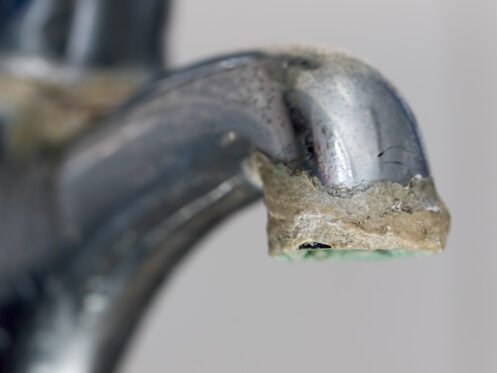
Mineral deposits often appear first on faucets and showerheads as white or chalky buildup. Scale can clog small openings, reduce water flow, and make fixtures harder to keep clean.
Hard water can also affect toilets, washing machines, dishwashers, and water heaters. In water heaters, mineral scale can collect as water is heated, which may affect performance and increase maintenance needs over time.
If buildup has already contributed to leaks, damaged faucets, or other problems, professional fixture repair services can address the affected components.
Effective Solutions for Hard Water Problems
Arizona hard water solutions focus on reducing the minerals that cause scale and maintaining plumbing components that have already been affected.
For many homes, a water softener is one option for managing hard water. A plumber can also inspect fixtures and plumbing for existing mineral buildup and recommend repairs when needed.
Benefits of Installing a Water Softener
Traditional water softeners use an ion-exchange process to reduce calcium and magnesium in the water before it moves through your home.
Water softener benefits can include less scale on fixtures, reduced mineral accumulation inside plumbing components, and fewer hard-water deposits on water-using appliances. A water softener service can help determine the right system based on your home and water conditions.
Water softeners are designed to address hardness minerals. They are not intended to solve every possible water-quality concern.
Preventing Mineral Buildup in Your Plumbing System
Reducing hardness can help limit new scale from forming, but it may not remove existing damage or heavy buildup. Regular plumbing inspections can help identify restricted fixtures, damaged components, or other concerns associated with mineral deposits.
Protect Your Plumbing From Hard Water
If you are dealing with hard-water buildup in Gilbert, Able Plumbing Solutions, LLC can evaluate your plumbing and recommend appropriate options, including water softening and related repairs.
Contact us to request professional help protecting your plumbing from hard-water mineral buildup.
FAQs
Hard water can leave calcium and magnesium deposits inside pipes, fixtures, water heaters, and appliances. Over time, this scale may restrict water flow, affect performance, and increase maintenance needs.
Water softeners reduce the calcium and magnesium responsible for water hardness. This can help limit future scale formation, but softeners do not address every type of water-quality issue.
Yes. Continued mineral buildup can contribute to restricted flow, fixture wear, and added stress on plumbing components and water-using appliances over time.